
Most homeowners know they should clean their gutters, but knowing exactly how often is where things get fuzzy. Ask five different contractors and you might get five different answers. The truth is, there’s no single number that works for every home in Indianapolis. Your cleaning schedule depends on where you live, what’s growing around your house, and how Indianapolis weather treats your property each year.
Here’s a practical breakdown of what most local homes actually need.
The Standard Answer: Twice a Year
For most Indianapolis homes, twice a year is the baseline, once in late spring and once in late fall. That schedule works well for properties with modest tree coverage and a roof that isn’t collecting a lot of debris.
Late Spring (May–June): This window is important because Indianapolis gets its heaviest rainfall between April and June. Maple seeds, oak tassels, and early pollen can pack gutters tighter than most people expect. Heading into the rainy season with clear gutters makes a real difference.
Late Fall (November): This is the one most homeowners already know about. After the leaves drop and before the first hard freeze, getting your gutters cleaned means water can drain freely through winter instead of pooling and freezing inside the trough.
When Twice a Year Isn’t Enough
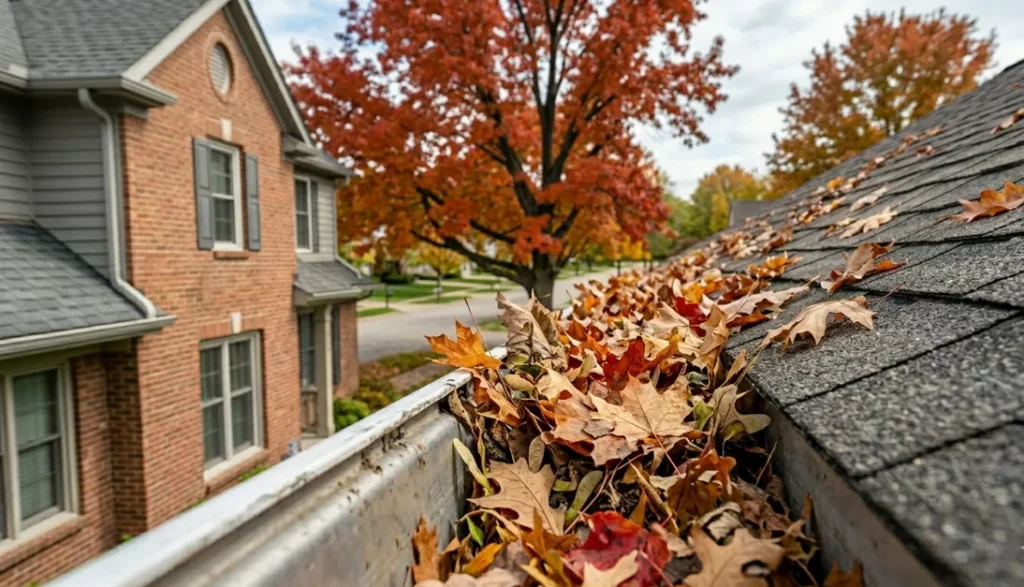
If your home is surrounded by mature trees, which describes a lot of properties in neighbourhoods like Meridian Hills, Broad Ripple, and Irvington, twice a year probably won’t cut it.
Heavy tree coverage typically calls for three to four cleanings per year. The extra visits usually fall in mid-summer and again in early spring before the rainy season kicks in. Maple helicopters alone can clog a downspout in a matter of days during peak seed drop.
Signs You Need More Frequent Cleaning:
* Water spills over the sides during moderate rain (not just heavy storms).
* You can see visible debris or plant growth from the ground.
* Your downspouts drain slowly or not at all after storms.
* You’ve had pest issues, birds, mosquitoes, or squirrels nesting in the gutters.
What Indianapolis Weather Does to Your Gutters
Indianapolis weather is genuinely hard on gutter systems. The city averages around 39 inches of rain per year, spread fairly evenly across the seasons, with summer thunderstorms often delivering heavy downpours in short windows. That kind of intensity can flush debris into downspouts and create clogs faster than slow, steady rainfall.
The Freeze-Thaw Danger in Winter
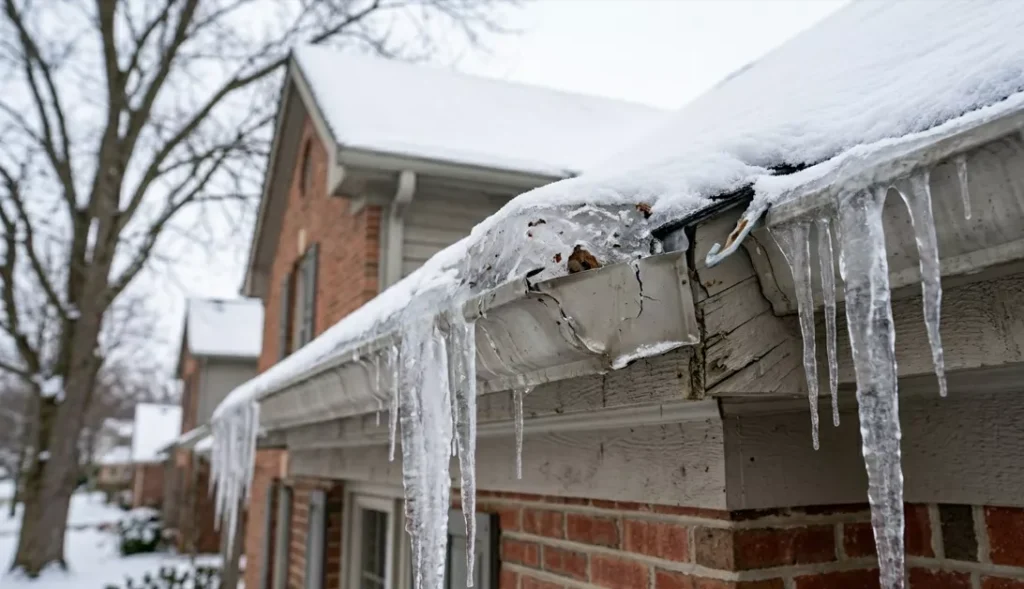
Winter brings a separate challenge. Indianapolis sits in a freeze-thaw zone, meaning temperatures regularly cross back and forth over the freezing point throughout the colder months. When gutters are clogged, water backs up and freezes. As ice expands, it can pull gutter hangers loose, crack seams, and push water under roofing materials, all damage that’s entirely preventable with regular maintenance.
Spring storms also come with high winds, which means roofing granules, small branches, and debris end up in gutters even when trees aren’t actively shedding. A post-storm check in spring is worth building into your routine if your neighbourhood gets hit by severe weather.
Do Gutter Guards Change the Schedule?
Yes, but they don’t eliminate it. Gutter guards are designed to block large debris like leaves and twigs, and they do a solid job of reducing how often your gutters fill up. But smaller particles, shingle granules, pollen, seeds, and fine grit, can still accumulate over time inside the trough.
Most homes with gutter guards can stretch to one cleaning per year instead of two, with an occasional check after major storms. What changes is the urgency, not the need entirely.
A Simple Schedule for Indianapolis Homeowners
Here’s a quick reference checklist based on your property’s situation:
Minimal tree coverage: Once a year, ideally in late fall.
Moderate tree coverage: Twice a year, late spring and late fall.
Heavy tree coverage (Maples, oaks, etc.): Three to four times per year (Spring, mid-summer, late fall, and post-storm).
Older home or previous drainage issues: Stick to at least twice a year and add a quick inspection after each major storm system.
What Happens If You Skip It?
Skipping a cleaning here and there doesn’t usually cause immediate damage, but it does set up problems down the road. The most common consequences of neglected gutters include water backing up under shingles and into the attic, fascia boards rotting from prolonged moisture exposure, and water pooling against the foundation.
Foundation issues in Indianapolis are taken seriously precisely because of the freeze-thaw cycle. Water that puddles against the foundation in fall can freeze, expand, and cause cracks over multiple winters. Catching a gutter problem in September is far cheaper than dealing with foundation repair the following spring.
Get a Custom Assessment for Your Home
If you’re not sure where your home falls on the spectrum, the simplest approach is to start with two cleanings per year and adjust based on what the crew finds. If gutters are packed every time, add a third visit. If they’re mostly clear, once may be sufficient.
At Indy Gutter Cleaning (https://indyguttercleaning.com), we serve homeowners throughout Indianapolis, Carmel, Fishers, Zionsville, Plainfield, and Meridian Hills. If you’d like a straightforward assessment of how often your home actually needs service, reach out to our team today, and we’ll take a look!